
Copyright © TRS Worksite Solutions. All Rights Reserved.

Functional Capacity Evaluations (FCEs) play a critical role in determining an employee’s ability to safely perform essential job tasks following an injury or during the return-to-work process. But even the most sophisticated FCE testing only becomes meaningful when measured against accurate, validated physical demands. Without this foundation, results are vulnerable to misinterpretation, inconsistency, and costly return-to-work errors.
In short:
An FCE is only as strong as the physical demands it is compared to.
Across industries—manufacturing, utilities, transportation, warehousing, and more—many job descriptions haven’t been updated in years. Often, they are:
When these outdated descriptions are used as the standard for an FCE, the evaluator is left comparing precise functional data to an imprecise or incomplete job profile. This creates risk for the employer, the employee, and the case manager relying on the results.
A validated Physical Demands Analysis (PDA) is built on real data—collected onsite, confirmed with workers and supervisors, and measured using objective, repeatable methods. These accurate demands provide the anchor points that make FCE results meaningful.
FCEs must demonstrate whether an individual can safely perform essential job functions of their job. Validated demands provide:
This reduces disputes and supports confident decision-making.
Accurate demands allow evaluators to measure exactly what matters:
With validated demands, recommendations are far more precise—leading to safer return-to-work decisions and fewer reinjuries.
A high-quality FCE is quantitative and unbiased. When paired with validated demands, the evaluation becomes:
This elevates the credibility of the entire return-to-work process.
Employees benefit from fairness and accuracy. Employers benefit from reduced risk.
Validated demands help ensure:
It creates a balanced, transparent framework that supports everyone involved.
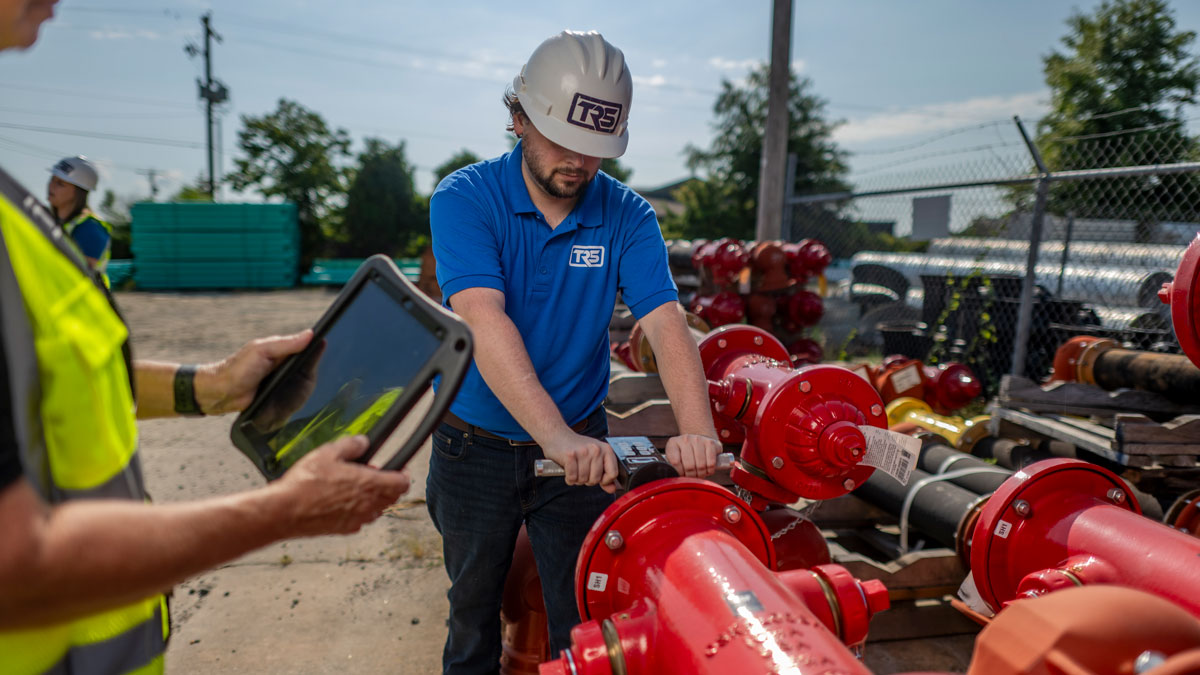
At TRS Worksite Solutions, validated physical demands are not an afterthought—they are the foundation of our entire process. Because our team spends significant time in plants, mills, utilities, and field environments, we understand the true physical realities of each job.
This boots-on-the-ground experience allows us to:
When FCEs reflect real work, they produce real answers and real confidence.
If the demands aren’t correct, the FCE cannot be correct.
Validated demands make the process safer, clearer, more effective, and legally defensible. If you order an FCE, validated Physical Demands are invaluable.
If you need an FCE, let us get the Validated Physical Demands for you to ensure the test is as reliable as possible.